The Science Behind the Randomness in Online Gambling: Exploring Algorithms, Audits, and Perceptions
Online gambling has grown into a global phenomenon, capturing the attention of millions with its promise of excitement and potential rewards. Yet, behind every spin of a digital slot, every shuffle of a virtual deck, and every roll of the online dice lies a crucial component: randomness. But what does “random” truly mean in the context of online gambling? How do casinos ensure that the outcomes are unpredictable, fair, and immune to manipulation? This article delves into the science behind the randomness in online gambling, demystifying the technology and mathematics that drive the industry.
Understanding Randomness: The Cornerstone of Fair Play
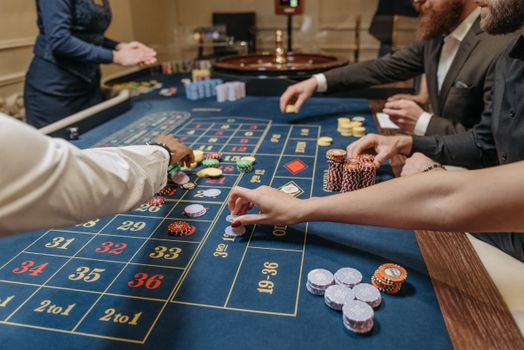
Randomness in gambling refers to the unpredictability of outcomes in games of chance. In traditional casinos, randomness is achieved through physical processes—shuffling cards, spinning roulette wheels, or rolling dice. Online gambling, however, operates in a digital environment, where there are no physical objects to generate unpredictable results.
.png)
Instead, online casinos rely on complex algorithms known as Random Number Generators (RNGs) to simulate randomness. An RNG is a computer program that produces sequences of numbers that cannot be reasonably predicted. These sequences determine the outcome of games—whether a slot reel lands on cherries, or a digital card is an ace or a five.
There are two main types of RNGs used in online gambling:
1. Pseudo-Random Number Generators (PRNGs): These rely on mathematical formulas and a starting value called a “seed.” While the sequence appears random, it is technically reproducible if the seed and algorithm are known. 2. True Random Number Generators (TRNGs): These use unpredictable physical processes, such as atmospheric noise or radioactive decay, to generate numbers.Most online casinos use PRNGs due to their speed and efficiency, but leading companies are increasingly exploring TRNGs to further enhance fairness.
The Mathematics Behind Random Number Generators
At the heart of every PRNG is a mathematical algorithm designed to produce a stream of numbers that pass statistical tests for randomness. One of the most commonly used algorithms in online gambling is the Mersenne Twister, renowned for its long period (over 4.3 x 10^6000) and high-quality output.
To understand how PRNGs work, consider this simplified example:
- The algorithm is initialized with a seed value, often sourced from the computer’s clock. - Using the seed, the algorithm applies a series of mathematical operations to generate a new number. - This number becomes the next seed, and the process repeats.Though deterministic, the sequence is so complex that, without knowledge of the seed, predicting future outcomes is virtually impossible. In practical terms, PRNGs can produce billions of unique outcomes per second, ensuring that each spin or deal is independent.
Statistical tests are regularly performed on these algorithms to confirm their compliance with randomness standards, such as the NIST (National Institute of Standards and Technology) suite or the Diehard tests. For example, a 2020 study found that leading PRNGs used in online casinos passed over 99% of industry-standard randomness checks, making them highly reliable for gaming applications.
How Online Casinos Ensure Fairness and Integrity
Randomness alone does not guarantee fairness—players must also trust that the casino cannot manipulate outcomes. To address this, reputable online casinos integrate several layers of oversight and transparency:
1. Independent Auditing: Third-party organizations, such as eCOGRA (eCommerce Online Gaming Regulation and Assurance) and iTech Labs, routinely test and certify RNGs. They run millions of simulations to verify that the outcomes match statistical probabilities and that payout percentages align with published rates. 2. Regulatory Oversight: Licensing bodies like the UK Gambling Commission or Malta Gaming Authority require operators to submit their software for regular testing. Non-compliance can result in hefty fines or license revocation. 3. Publicly Reported Payout Rates: Many sites publish their Return to Player (RTP) statistics, typically ranging from 94% to 98% for slots. This transparency allows players to make informed choices. 4. Cryptographic Security: Advanced casinos use cryptographic techniques to prevent tampering. For example, hash functions can “seal” game results before play, allowing players to verify outcomes after the fact.These measures not only uphold the science of randomness but also reinforce player confidence in the system. In 2022, over 85% of top online casinos opted for third-party RNG certifications, a testament to the industry’s commitment to fairness.
Psychology and Perceptions: Why Randomness Feels Predictable
Despite the robust science behind RNGs, human psychology often clashes with true randomness. Players are notoriously susceptible to the “gambler’s fallacy”—the belief that past outcomes influence future results. For example, after a streak of losses on a slot machine, some might think a win is “due to happen,” even though each spin is independent.
This perception is fueled by cognitive biases:
- Clustering Illusion: Players expect random sequences to be more evenly distributed than they really are. In reality, random events often come in streaks. - Illusion of Control: Some believe their actions—like pressing “spin” at a certain moment—can influence outcomes, when in fact the result is pre-determined by the RNG the instant the game is played.These biases are not unique to gambling but are amplified in high-stakes, emotionally charged environments. A 2021 survey by the UK Gambling Commission found that over 60% of online gamblers admitted to believing they could spot patterns in slot outcomes, despite the underlying randomness.
Understanding these psychological traps can help players make more rational decisions and enjoy gambling as entertainment, rather than a way to “beat the system.”
Comparing Randomness: Online Gambling vs. Traditional Casinos
How does the randomness in online gambling stack up against its brick-and-mortar counterpart? While both strive for unpredictability, their methods differ substantially. The table below highlights key distinctions:
| Aspect | Online Gambling | Traditional Casinos |
|---|---|---|
| Source of Randomness | Algorithmic (RNG/PRNG/TRNG) | Physical processes (cards, wheels, dice) |
| Testing & Auditing | Automated statistical testing, third-party audits | Physical observation, regulatory inspectors |
| Transparency | Public payout rates, audit certificates | Public scrutiny, visible processes |
| Manipulation Risk | Software vulnerabilities, must be protected digitally | Cheating (marked cards, loaded dice), needs physical safeguards |
| Consistency | Highly consistent, unaffected by human error | Subject to physical imperfections and dealer mistakes |
While both environments aim for fairness, the digital nature of online gambling allows for more rigorous, automated, and large-scale testing of randomness. However, it also demands robust cybersecurity to guard against software manipulation.
The Future of Randomness: Blockchain, Provable Fairness, and Beyond
The science of randomness in online gambling is not static. As technology advances, so too do the methods for generating and verifying random outcomes. A notable innovation is the rise of “provably fair” gaming, which leverages blockchain technology to give players unprecedented transparency.
In provably fair systems:
- The game outcome is determined by a combination of the casino’s RNG and a value (seed) supplied by the player. - Both values are hashed and published before the game starts, making the process tamper-proof. - Players can independently verify each outcome using cryptographic proofs.This approach, popularized in crypto casinos, has set new standards for trust. According to a 2023 report by Statista, over 20% of new online gambling platforms now offer some form of provably fair gaming.
Meanwhile, the pursuit of true randomness continues. Quantum random number generators, powered by the inherent unpredictability of quantum mechanics, are being explored for future gaming applications. These could one day provide the gold standard in unpredictable outcomes, immune even to the most sophisticated computer attacks.
Final Thoughts on the Science of Randomness in Online Gambling
The randomness at the heart of online gambling is the result of sophisticated mathematics, cutting-edge technology, and strict regulatory oversight. While the outcomes may appear as simple digital spins or card deals, behind the scenes lies a complex interplay of algorithms and audits designed to ensure every player gets a fair shot.
Understanding the science behind randomness can empower players to approach online gambling with greater confidence and clarity. As the industry evolves—embracing blockchain, quantum computing, and new auditing techniques—the commitment to unpredictability and fairness remains unshakable. In this ever-changing landscape, one thing is certain: the science of randomness will continue to be the bedrock of online gaming integrity.